I build backend and retrieval systems — hybrid search, database-enforced logic, and open-source fixes — and I care about proving they work.
- Programme
- M.Tech, CSE
- Institution
- IIITM Gwalior
- Role
- Software Engineer
- Available
- 2027 · full-time
As an M.Tech student at ABV-IIITM Gwalior, I like the part of software where a claim has to survive a check: a search system that cites its source, a wallet that cannot be double-spent, a test that fails when the bug comes back.
My recent work includes a hybrid-retrieval pipeline built during an internship at Accenture, a public assistant that answers questions over my institute's documents, a fantasy-esports app whose rules live inside PostgreSQL, and merged contributions to open-source projects, among them a C++ graph database and the Sentry JavaScript SDK. As Executive Secretary of the CS Students Council I also ran technical events for 400+ participants.
02 — Selected work
01
iiitm-rag-chatbot
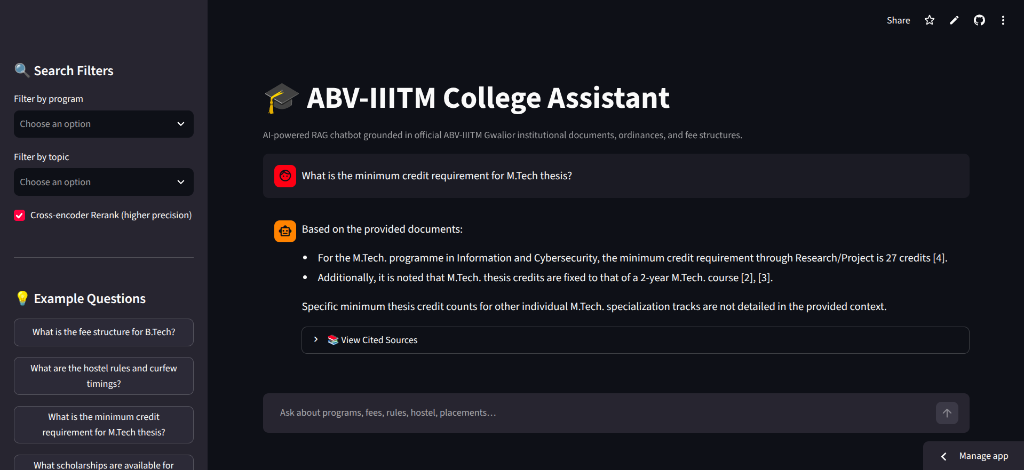
A cited-answer assistant over 180 institute PDFs, built on hybrid search (FAISS + BM25) with ONNX reranking.
RAG
2026
2026
Navigating complex university documentation and policies can be tedious. I built this RAG-based chatbot to digest the university's data sources and intelligently answer student inquiries in natural language, pulling exact context snippets directly from indexed documents.
- →Hybrid search: FAISS vectors and BM25 keywords fused with Reciprocal Rank Fusion.
- →Pluggable answer model: Gemini in the live app, Groq-hosted Llama or local Ollama as alternatives.
- →Interactive Streamlit UI with cross-encoder reranking and source citation.
- →Table-aware PDF extraction with OCR; embeddings and reranking run on ONNX, so no GPU or PyTorch is needed.
02
e-fantasy-app
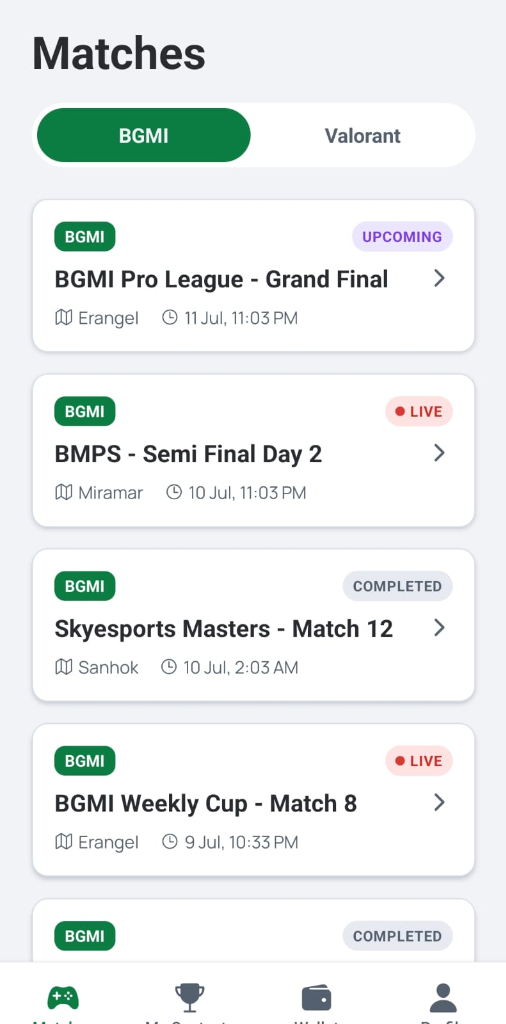
A cross-platform fantasy-esports app whose game and wallet rules are enforced inside PostgreSQL.
Full Stack
2026
2026
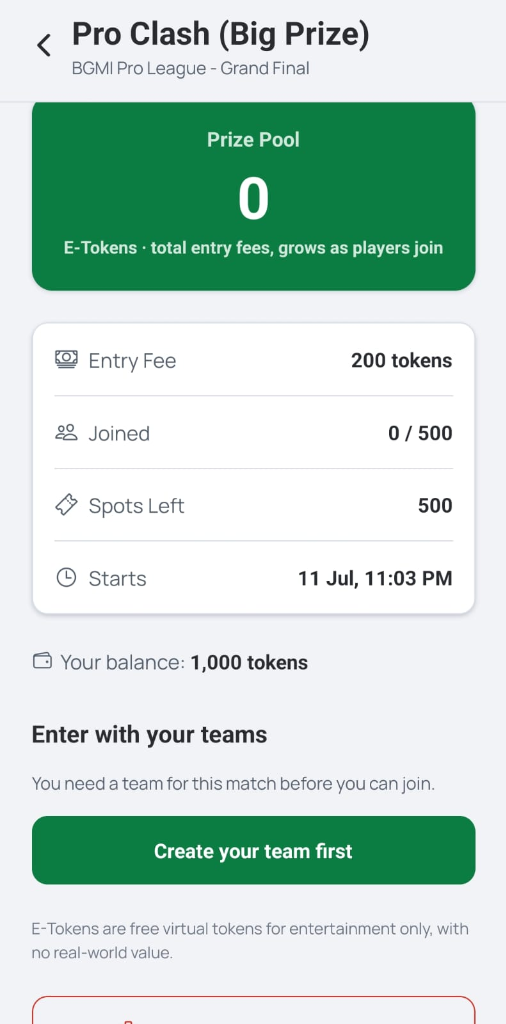
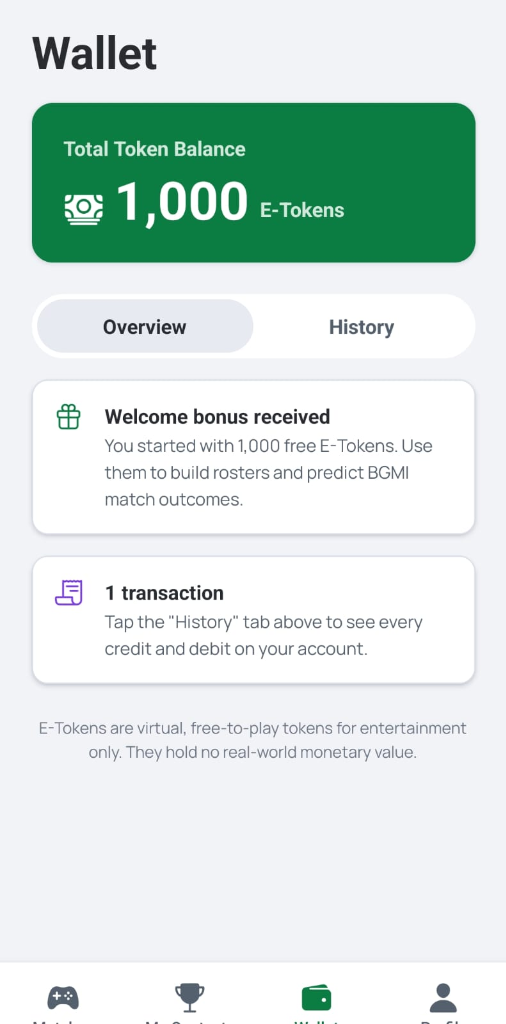
A free-to-play fantasy esports app for BGMI: users draft a roster, pick a captain and vice-captain, join contests with virtual E-Tokens, and follow live leaderboards. No real money is involved.
- →React Native (Expo) with TypeScript: one codebase for Android, iOS and web.
- →Row-Level Security on all 12 tables: wallets, ledgers and contest entries are read-only to clients, and those writes go through PL/pgSQL functions.
- →Interactive in-app E-Tokens wallet with match entry & reward transaction tracking.
- →Contest entry is a single transaction that row-locks the contest and wallet, so balances cannot drift under concurrent joins.
A breakdown of the tools and libraries I rely on to ship AI features and full-stack applications.
FAISS and ChromaDB for similarity search, combined with BM25 keyword scoring.
LangChain, scikit-learn, Streamlit, and React Native (Expo).
Streamlit Community Cloud for the live chatbot, and Supabase for E-Fantasy’s Postgres database.